
How Can Shoulder Pain Physiotherapy in Gurugram Help Reduce Pain and Improve Shoulder Movement?
Shoulder pain can make simple activities such as reaching overhead, dressing, lifting a bag, working at a desk, or sleeping uncomfortable. Shoulder Pain Physiotherapy in Gurugram can help manage pain, improve shoulder movement, restore strength, and support a gradual return to daily activities. At GS Physiotherapy, treatment is planned according to the cause of pain, physical limitations, and individual recovery goals.
For fast notification, contact us on WhatsApp.
The shoulder is a highly mobile joint. Because it allows the arm to move in many directions, it also depends on several muscles, tendons, ligaments, and surrounding joints for stability. Problems in any of these structures can lead to pain, stiffness, weakness, or restricted movement.
What Causes Shoulder Pain?
Shoulder pain can develop suddenly after an injury or gradually because of repetitive movements and poor posture. Some common causes include:
Rotator cuff injuries
Frozen shoulder
Shoulder impingement
Tendonitis or bursitis
Arthritis
Shoulder dislocation
Fractures
Repetitive strain
Muscle weakness
Poor posture and workstation habits
Pain can sometimes also be related to the neck or upper spine. Therefore, identifying the actual source of the symptoms is important before starting a rehabilitation program.
How Does Shoulder Pain Physiotherapy in Gurugram Reduce Pain?
The first goal of physiotherapy is to make movement more comfortable. Depending on the condition, a physiotherapist may use different techniques to help manage pain and improve function.
1. Physical Assessment
Treatment begins with an assessment of shoulder movement, muscle strength, posture, pain patterns, and functional limitations. This helps the physiotherapist understand which movements are restricted and which structures may be contributing to the problem.
A personalized assessment also helps avoid unnecessary exercises that could aggravate the shoulder.
2. Manual Therapy
Manual therapy involves hands-on techniques designed to improve joint mobility and reduce soft-tissue tension. When appropriate, these techniques may help the shoulder move more comfortably.
Manual therapy can be combined with active exercises rather than being used as the only form of treatment.
3. Therapeutic Exercises
Exercise is an important part of Shoulder Pain Physiotherapy in Gurugram. A structured program may include gentle mobility exercises, stretching, strengthening, and functional movements.
The exercises can be adjusted according to the patient's condition and progress.
4. Heat, Cold and Electrotherapy
Certain physiotherapy modalities may be used to help manage pain and discomfort. Depending on the individual assessment, treatment may include heat or cold therapy, TENS, or therapeutic ultrasound.
These approaches are generally used alongside rehabilitation exercises rather than replacing active treatment. GS Physiotherapy lists modalities such as cold and heat therapy, ultrasound, electrical stimulation, and soft-tissue techniques as part of its shoulder-pain treatment approach.
How Can Physiotherapy Improve Shoulder Movement?
Pain often causes people to avoid using their shoulder. Over time, reduced movement can contribute to stiffness and weakness. Physiotherapy focuses on gradually restoring comfortable movement.
Improving Flexibility
Gentle stretching and mobility exercises can help address stiffness around the shoulder and surrounding muscles.
Building Shoulder Strength
Strengthening the rotator cuff and shoulder stabilizers can help improve shoulder control. Stronger supporting muscles can also make everyday movements easier.
Improving Scapular Movement
The shoulder blade plays an important role in healthy arm movement. Physiotherapy may include exercises that improve scapular control and coordination.
Correcting Posture
Poor sitting posture and prolonged desk work can contribute to shoulder and upper-body discomfort. A physiotherapist can provide guidance on posture, workstation setup, and movement habits.
GS Physiotherapy's shoulder rehabilitation approach includes rotator cuff and shoulder-stabilizer strengthening, flexibility work, posture correction, and mobility training.
What Can You Expect During Shoulder Pain Physiotherapy in Gurugram?
A typical rehabilitation program may progress through different stages.
Initially, the focus may be on reducing irritation and making basic movements more comfortable. Once pain and stiffness are better controlled, exercises can gradually become more challenging.
The next stage may focus on restoring strength, coordination, and shoulder stability. Later, functional exercises can help prepare you for work, exercise, sports, or other daily activities.
The exact treatment plan depends on the condition. Someone with frozen shoulder may require a different approach from someone recovering from a rotator cuff injury.
Who Can Benefit From Shoulder Physiotherapy?
Shoulder Pain Physiotherapy in Gurugram may be useful for people experiencing:
Persistent shoulder pain
Shoulder stiffness
Reduced range of motion
Rotator cuff problems
Frozen shoulder
Shoulder impingement
Pain after an injury
Weakness while lifting the arm
Difficulty performing daily activities
Shoulder problems related to posture or repetitive movements
GS Physiotherapy specifically provides care for shoulder pain, frozen shoulder, shoulder impingement, and rotator cuff conditions.
Why Is Early Physiotherapy Important?
Ignoring shoulder pain for a long time can sometimes lead to reduced activity, increasing stiffness, and loss of strength. Early assessment can help identify the cause and establish an appropriate rehabilitation plan.
However, not every shoulder problem should be treated with exercises without an assessment. Severe pain after trauma, visible deformity, sudden weakness, significant swelling, or symptoms such as chest pain or difficulty breathing require appropriate medical evaluation.
Shoulder Pain Physiotherapy in Gurugram at GS Physiotherapy
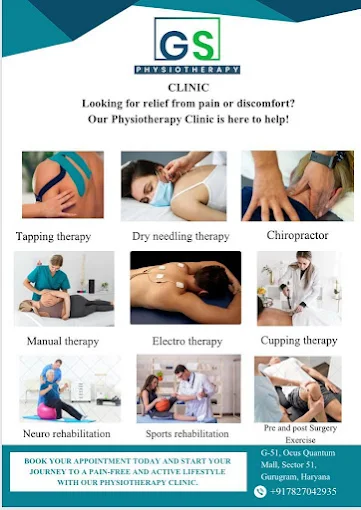
GS Physiotherapy provides personalized physiotherapy care focused on restoring movement, reducing discomfort, and improving physical function. The clinic offers orthopedic physiotherapy, manual therapy, electrotherapy, and sports physiotherapy services.
The clinic is located at Ground, Ocus Quantum, G-51, Mall Sector-51, Gurugram, Haryana 122003. Treatment plans are designed according to the individual's condition, functional needs, and recovery goals.
The goal is not simply to reduce pain temporarily. A well-structured rehabilitation program also works on mobility, strength, movement control, and healthy activity patterns.
FAQs
1. Can physiotherapy help with shoulder stiffness?
Yes. Physiotherapy can use mobility exercises, stretching, manual therapy, and progressive strengthening to improve shoulder movement. The exact approach depends on the cause and severity of stiffness.
2. Can physiotherapy help with frozen shoulder?
Physiotherapy is commonly used as part of frozen shoulder rehabilitation. Treatment may focus on gradually improving range of motion, reducing stiffness, and rebuilding shoulder function.
3. How does physiotherapy help a rotator cuff problem?
A physiotherapist can assess shoulder movement and strength and develop an appropriate rehabilitation program. Exercises may focus on the rotator cuff, shoulder stabilizers, mobility, and gradual return to normal activities.
4. Should I exercise when my shoulder hurts?
It depends on the cause and severity of the pain. Some exercises may be helpful, while inappropriate movements may increase irritation. It is better to follow exercises recommended after an appropriate assessment.
5. Can physiotherapy prevent shoulder pain from coming back?
A rehabilitation program may help reduce the risk of recurrence by improving strength, mobility, posture, movement control, and activity habits. Long-term results also depend on following the recommended exercises and lifestyle guidance.
Conclusion
Shoulder pain can affect work, exercise, sleep, and everyday movements. Shoulder Pain Physiotherapy in Gurugram can provide a structured approach to managing discomfort while improving flexibility, strength, mobility, and shoulder function.
At GS Physiotherapy, treatment is personalized according to the patient's condition and recovery goals. With appropriate assessment, progressive exercises, manual therapy, and movement guidance, physiotherapy can support a gradual and confident return to normal activities.
If shoulder pain or stiffness is affecting your daily routine, an assessment by a qualified physiotherapist can help determine the right rehabilitation approach.
For more information about GS Physiotherapy, visit https://gsphysiotherapy.in/ to learn more about their services or to book an appointment.

Why is GS Physiotherapy Considered the Best Physiotherapy Clinic in Gurgaon?
क्यों GS Physiotherapy को गुड़गांव में सर्वश्रेष्ठ फिजियोथेरेपी क्लिनिक माना जाता है?

What Techniques Are Used at GS Physiotherapy for Tennis Elbow Relief?